
50+ Best Team Building Activities for Students (Grades K-12)
Team building activities for students do more than fill time between lessons. They build the communication skills, collaboration habits, and problem-solving abilities that shape how young people interact with the world. Team building activities can range from icebreakers to complex challenges, and the right ones help students learn to express ideas clearly, build trust, and foster friendships that make classrooms feel like communities.
Engaging in team building fosters a sense of belonging in classrooms. Group activities combine cognitive and social learning experiences for youth education, which is why effective team-building activities foster trust and enhance communication skills simultaneously. Effective communication includes both verbal and non-verbal skills, and the best activities train both.
This guide covers 50+ team building activities organized by grade level, filtered by time, materials, and setting. Whether you teach kindergarten or coach high schoolers, you'll find activities matched to your situation.
How We Chose the Best Team Building Activities for Students
Not every activity labeled "team building" actually builds teams. Effective team-building activities adapt to different age groups and classroom dynamics. Here's how we evaluated each one:
- Age appropriateness: Activities match the cognitive and social capacity of the target grade level. What works for a second grader won't land with a high schooler.
- Ease of implementation: Minimal prep, quick setup, and clear instructions. Teachers don't have 30 minutes to arrange an activity. Team-building exercises generally require minimal materials and encourage creativity.
- Learning objectives alignment: Each activity targets specific skills - leadership, trust, decision-making, creative thinking, or communication.
- Inclusivity and accessibility: Activities work for diverse learners, including students with disabilities. A 2026 meta-analysis of 50 behavioral intervention studies across K-12 settings found large effect sizes for improving group engagement (SMD = 2.28 for single-case designs, g = 1.69 for group designs), and these effects held regardless of disability inclusion.
- Safety: Physical and psychological safety considerations for every activity, including emotional debriefs where needed.
- Proven effectiveness: We prioritized activities backed by educator feedback, published research, and observable classroom outcomes.
Elementary School Team Building Activities (Grades K-5)

Elementary students need activities with simple instructions, short time frames, and plenty of movement. A systematic review of 56 primary school studies found that activity-based learning was the most common and effective approach for building social awareness and relationship skills in this age group. Building activities enhance problem-solving skills through hands-on experience, even for the youngest learners.
Featured Elementary Activities
1. Human Knot - The human knot requires 5 to 10 students to stand in a circle, grab hands with two different people across from them, and untangle themselves without letting go. Non-verbal communication is improved through games like The Human Knot. This awesome team building game builds patience and spatial reasoning.
- Best for: Grades 2-5
- Time: 10-15 minutes
- Strengths: Zero materials, high energy, teaches cooperation
- Limitations: Can be frustrating for younger students; requires physical comfort with peers
2. Marshmallow Tower Challenge - Give teams 20 spaghetti sticks, tape, and one marshmallow, and challenge them to build the tallest freestanding tower that holds the marshmallow on top. The Marshmallow Tower Challenge fosters teamwork and creative problem-solving as students figure out what actually stands up.
- Best for: Grades 3-5
- Time: 15-20 minutes
- Strengths: Develops engineering thinking, requires real collaboration
- Limitations: Needs materials (spaghetti, tape, marshmallows)
3. Birthday Lineup (Silent Line-Up) - Birthday lineup helps students find their place by birthdays - without talking. Silent Line-Up encourages nonverbal communication among students. Students stand in a line and use only gestures and hand signals to arrange themselves in calendar order.
- Best for: Grades K-5
- Time: 5-10 minutes
- Strengths: No materials, builds non-verbal communication, inclusive
4. Storytime Chain - Students add four words to a growing story, one at a time, building a collective narrative. Storytime enhances verbal communication as each student must listen and build on what came before.
- Best for: Grades K-4
- Time: 10 minutes
5. Compliment Chain - Students sit in a circle. The first person gives a genuine compliment to the next student, who passes one along to the next person. This builds social skills for kids and classroom warmth.
- Best for: Grades K-3
- Time: 5-10 minutes
6. Hula Hoop Pass - Students stand in a circle holding hands, with a hula hoop resting on one student's arm. The hoop must travel around the entire circle without anyone letting go - students thread it over their bodies using only movement and coordination with their neighbors.
- Best for: Grades K-5
- Time: 10 minutes
- Strengths: Physical, fun, requires whole class participation
7. Puzzle Piece Connections - Divide students into small groups. Give each group a puzzle, but mix a few pieces from other groups' puzzles in. Students work together and then negotiate with other teams to complete their puzzles.
- Best for: Grades 2-5
- Time: 15 minutes
8. Two Truths and a Lie - Two Truths and a Lie is an icebreaker that helps students practice speaking and attentive listening. One student shares three statements - two true, one false - and other students guess the lie. It's a fun way to build listening skills and learn about classmates.
- Best for: Grades 2-5
- Time: 10-15 minutes
9. Classroom Bingo - Bingo can include characteristics like "I have a sister," "I speak two languages," or "I like pizza." Students walk around the room finding classmates who match each square. This is a great community building activity for elementary students.
- Best for: Grades 1-5
- Time: 10-15 minutes
10. Building a Classroom Mascot - Building a classroom mascot fosters collaboration and creativity among students. Divide students into small teams and give each team craft sticks, paper, markers, and tape. Each team designs a mascot, then the whole class votes or combines ideas into one. This is a fun activity that can kick off the school year.
- Best for: Grades K-4
- Time: 20-30 minutes
11. The Great Chain Race - The Great Chain Race requires students to use creative thinking for teamwork. Give teams paper strips, tape, and scissors. Students race to build the longest paper chain within a time limit. All the teams compare their chains at the end.
- Best for: Grades 1-5
- Time: 10 minutes
12. Cooperative Musical Chairs - Instead of eliminating players, remove chairs and require students to share remaining seats. The whole class must fit on fewer and fewer chairs without anyone touching the ground.
- Best for: Grades K-3
- Time: 10 minutes
13. Pass the Drawing - One student draws for 30 seconds, then passes the paper to the next student. After everyone adds to it, the group guesses what the original drawing was supposed to be. Teaches students that collaboration means building on each other's work.
- Best for: Grades K-5
- Time: 10 minutes
14. Group Freeze Dance - Students dance when music plays, freeze when it stops. Add a team twist: when the music stops, students must freeze in a group pose (e.g., "make a bridge with your group"). Students learn to coordinate quickly.
- Best for: Grades K-2
- Time: 10 minutes
15. Tower of Cups - Give small teams 20 plastic cups and a rubber band with four strings tied to it. Students must work together to stack the cups into a pyramid without touching cups with their hands - only using the rubber band tool. This activity develops confidence building through shared success.
- Best for: Grades 2-5
- Time: 15 minutes
Middle School Team Building Activities (Grades 6-8)
Middle school is where peer relationships get complicated. Team building activities for middle school students need to balance fun with genuine skill development. A study on team-building physical education programs for middle school found measurable improvements in sociability, fair play, social responsibility, and positive interpersonal relations.
Team-building activities help students develop problem-solving abilities and trust - both essential at an age when social dynamics shift daily.
Featured Middle School Activities
16. Escape Room Challenges - Escape room games require students to solve puzzles collaboratively under a time limit, encouraging critical thinking and teamwork. Create a DIY escape room with locks, coded messages, and clues hidden around the classroom.
- Best for: Grades 6-8
- Time: 30-45 minutes
- Strengths: High engagement, develops problem solving skills
- Limitations: Requires significant prep time
17. Blind Minefield - Blind Minefield involves one blindfolded student guided by a partner through an obstacle course made of classroom objects. The blindfolded student relies entirely on verbal cues from their team members. Obstacle run uses classroom furniture to create a maze for blindfolded students.
- Best for: Grades 6-8
- Time: 15 minutes
- Strengths: Builds trust, sharpens communication
18. Cup Stacking Challenge - Cup stacking involves teams of four to eight students. Cup stacking uses rubber bands and strings to build a pyramid - students pull the strings to stretch the rubber band, lift cups, and place them without direct hand contact. It's one of those favorite team building activities that never gets old.
- Best for: Grades 5-8
- Time: 15 minutes
19. Group Story Building - Like Storytime but more complex: give each small group a scenario and have them write a collaborative short story with a beginning, middle, and end. Each team member must contribute at least one plot point.
- Best for: Grades 6-8
- Time: 20 minutes
20. Falling Trees Trust Exercise - Falling Trees involves students catching a stiff "tree" in a circle. One student stands rigid in the center while the rest of the group gently catches and passes them around the circle. This builds physical trust and group accountability.
- Best for: Grades 6-8
- Time: 15 minutes
- Limitations: Requires psychological safety and physical comfort
21. Look Into My Eyes - Look into my eyes requires students to maintain eye contact for 60 seconds with a partner without laughing or looking away. Sounds simple, but it's surprisingly challenging and teaches focused attention.
- Best for: Grades 6-8
- Time: 5 minutes
22. Fashion Design Challenge - Give teams limited materials (newspaper, tape, scissors) and a time limit. Each team designs and "models" an outfit. Judges award points for creativity, teamwork, and presentation. Students work together under pressure while practicing public speaking for kids.
- Best for: Grades 6-8
- Time: 25 minutes
23. Bridge Building Challenge - Teams use craft sticks, tape, and string to build a bridge that can hold a textbook. Students race to finish first, but the winning team is the one whose bridge holds the most weight.
- Best for: Grades 6-8
- Time: 20-30 minutes
24. STEM Tower Race - Based on a 2026 STEM action research study that found significant gains in cooperation and communication when Grade 5 students completed structured team engineering tasks: give teams index cards, tape, and a ruler. The goal is the tallest freestanding tower. Measure and discuss what worked.
- Best for: Grades 5-8
- Time: 20 minutes
25. Minefield Navigation - Set up an obstacle course in the gym or classroom. Divide students into two teams. One team member is blindfolded while another gives directions. The other team tries to (safely) distract. This teaches students to focus and communicate under pressure.
- Best for: Grades 6-8
- Time: 15 minutes
26. Would You Rather Debate - Pose "Would You Rather" scenarios related to school, ethics, or hypothetical situations. Students take sides and must argue their position. Develops critical thinking and persuasion.
- Best for: Grades 6-8
- Time: 10-15 minutes
27. Team Trivia Tournament - Divide students into equal teams. Ask trivia questions across subjects. Teams discuss answers before submitting. This is a classic game format that promotes collaboration and friendly competition.
- Best for: Grades 5-8
- Time: 20 minutes
28. Human Conveyor Belt - Students lie side by side on the floor. One student "rolls" across the top, supported by their classmates' arms. Then they join the line, and the next person goes. Builds trust and group coordination.
- Best for: Grades 6-8
- Time: 15 minutes
29. Collaborative Playlist - Each team member suggests one song that represents them. The group creates a team playlist with a theme. Students present their playlist and explain their choices. Fosters connection and respect for differences.
- Best for: Grades 7-8
- Time: 15 minutes
30. Classroom Create: Mural Project - Give each team a section of butcher paper. They must design their section to connect visually with adjacent teams' sections. The finished product is a classroom created mural that hangs all year.
- Best for: Grades 5-8
- Time: 30 minutes
High School Team Building Activities (Grades 9-12)
High school students need team building activities that respect their maturity while developing leadership skills and real-world collaboration. Research on sports team cohesion shows that interventions lasting more than two weeks produce significantly stronger task cohesion - the ability to work effectively toward shared objectives.
Students develop leadership skills through team building exercises at this level. Activities should connect to future career skills and essential skills for adulthood.
Featured High School Activities
31. Business Simulation Games - Teams receive a budget, a product idea, and a market scenario. They must plan pricing, marketing, and sales strategy, then "pitch" to a panel. This is where team building skills meet entrepreneurship. Activities like these connect directly to programs like Lemonade Day, where students plan and run real businesses.
- Best for: Grades 9-12
- Time: 45-60 minutes
32. Debate Circles - Debate Circles foster verbal skills and empathy through group discussions. Assign teams a topic, give them 10 minutes to prepare, and run a structured debate. The twist: halfway through, teams switch sides and argue the opposite position.
- Best for: Grades 9-12
- Time: 30 minutes
- Strengths: Builds empathy, critical thinking, and articulation
33. Community Service Projects - Teams identify a local need, plan a service project, execute it, and present results. This builds project management skills, accountability, and civic responsibility.
- Best for: Grades 9-12
- Time: Multi-session
34. Innovation Challenge - Present a real-world problem (food waste, water conservation, school attendance). Teams brainstorm, prototype, and pitch solutions. Judges evaluate creativity, feasibility, and teamwork.
- Best for: Grades 10-12
- Time: 45-60 minutes
35. Conflict Resolution Scenarios - Give teams a realistic conflict scenario (workplace disagreement, group project dispute). They role-play resolution strategies and debrief. This connects to conflict resolution skills that serve students throughout life.
- Best for: Grades 9-12
- Time: 20-30 minutes
36. Shark Tank Pitch - Teams develop a product concept, create a basic business plan, and pitch to "investors." This fun team building activity teaches collaboration, persuasion, and financial literacy. About a quarter of team time should go to rehearsing the pitch.
- Best for: Grades 9-12
- Time: 45-60 minutes
37. Survival Scenario - Teams are "stranded" with a list of 15 items. They must rank items by importance for survival, first individually, then as a group. Compare group decisions to expert rankings. Demonstrates that teams solve problems better than individuals.
- Best for: Grades 9-12
- Time: 20-30 minutes
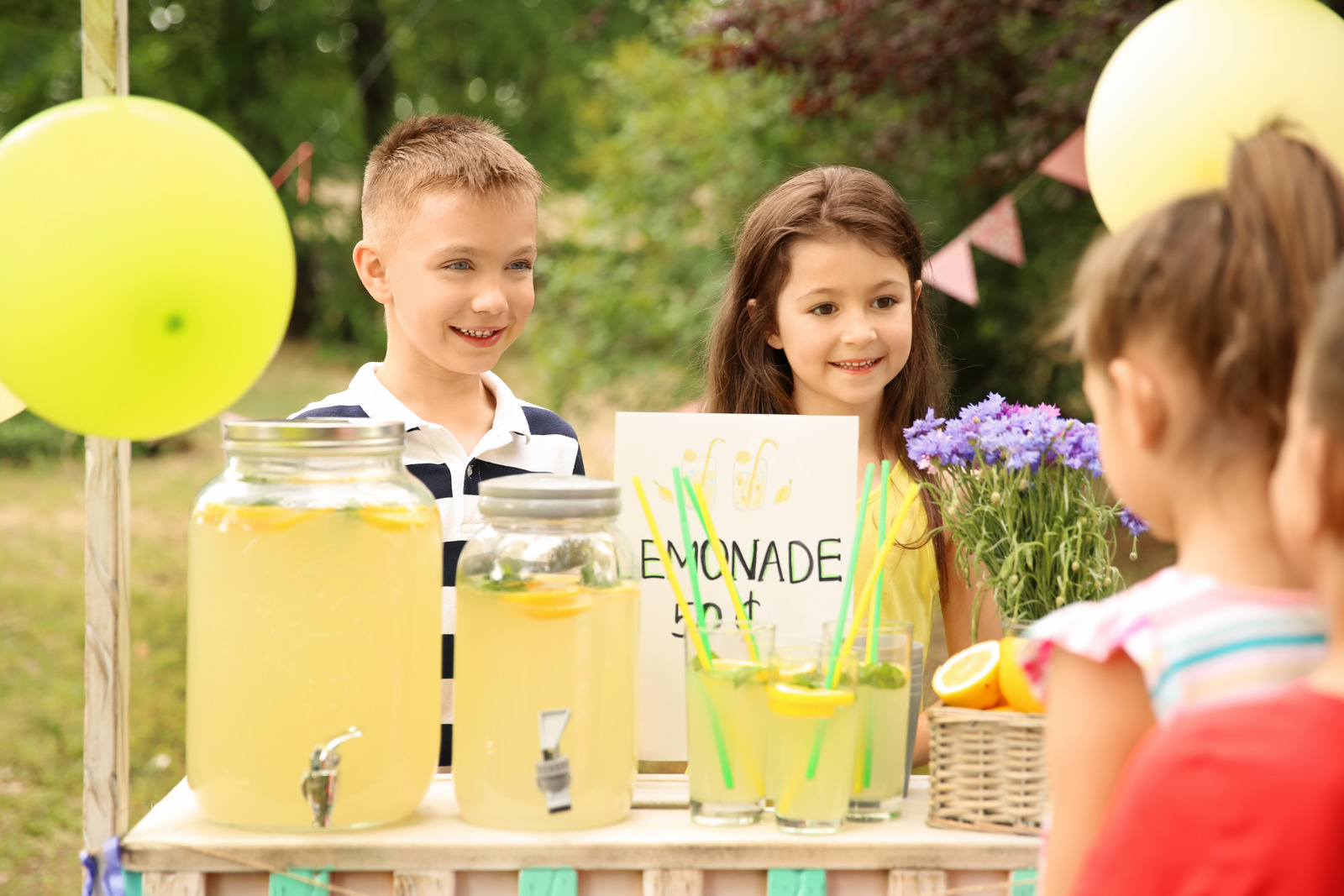
38. Lemonade Stand Planning Challenge - Teams plan a complete lemonade stand business: budget, marketing, pricing, location, and supply chain. They present plans and the class votes on the most viable business. This directly mirrors the entrepreneurial mindset development that real Lemonade Day participants experience.
- Best for: Grades 6-12
- Time: 30-45 minutes
39. Creative Collaboration: Meme Contest - Creative collaboration activities, like creating memes, promote teamwork and creativity. Teams create memes related to a class topic or school experience. The class votes on the best ones. Surprisingly effective at building rapport.
- Best for: Grades 9-12
- Time: 15-20 minutes
40. Project Management Simulation - Give teams a complex task with dependencies, deadlines, and limited resources. They must assign roles (project manager, researcher, presenter), manage their timeline, and deliver. Students take ownership of real responsibilities.
- Best for: Grades 10-12
- Time: Multi-session
41. Reverse Engineering Challenge - Give teams a finished product (a simple machine, a recipe result, a coded message). They must figure out how it was made, then replicate it. Develops analytical thinking and team coordination.
- Best for: Grades 9-12
- Time: 25-30 minutes
42. Speed Networking - Modeled after speed dating, students rotate through 2-minute conversations with classmates, answering prompts like "What's a skill you're proud of?" and "What's a problem worth solving?" Builds connection and leadership for kids by practicing professional communication.
- Best for: Grades 9-12
- Time: 15-20 minutes
43. Documentary Planning - Teams plan a 3-minute documentary on a school or community topic. They outline scenes, assign roles (director, interviewer, editor), and create a storyboard. Even without filming, the planning process teaches students how to work effectively as a production team.
- Best for: Grades 9-12
- Time: 30 minutes
44. Budget Challenge - Give each team a fictional budget and a set of expenses. They must make spending decisions as a group, balancing wants vs. needs. Connects to financial literacy games and real-world money management.
- Best for: Grades 9-12
- Time: 20 minutes
45. Legacy Letter - Teams write a letter to next year's class, sharing advice, memories, and lessons learned. Each team member contributes a section. This reflective exercise builds emotional intelligence and collective identity.
- Best for: Grades 11-12
- Time: 20-25 minutes
K-12 Classroom Activities (All Ages)

These classroom team building activities work across every grade level with simple modifications. They're versatile, require minimal setup, and promote collaboration regardless of age.
46. Scavenger Hunt - Scavenger hunts work in pairs, small groups, or larger teams - students learn to strategize and divide tasks under pressure. For elementary students, use picture clues; for high school students, add riddles or academic content.
- Time: 15-30 minutes
47. Collaborative Canvas - Collaborative Canvas involves students creating a joint artwork together. Give each student one section of a large canvas or paper. They create their piece independently, then assemble the finished artwork. Works for any grade level.
- Time: 20-30 minutes
48. Collaborative Storytelling - Like Storytime for older students: each group member adds a sentence or paragraph. Vary complexity by grade level. Teaches students that every voice matters.
- Time: 10-15 minutes
49. Group Art Projects - Assign a theme (seasons, community, dreams) and have small teams create a poster, sculpture, or collage. The whole class displays results. This is a classroom team building activity that doubles as decoration.
- Time: 20-30 minutes
50. Hula Hoop Challenge (Advanced) - Stand the whole class in a circle. Place a hula hoop on one person's arm. Everyone joins hands. The hula hoop must travel around the entire circle without anyone releasing hands. For younger students, use a bigger hoop. When fingers slip, the group resets and tries again.
- Time: 10-15 minutes
51. Telephone (Classic) - This classic game never fails. One student whispers a message to the next person, who whispers to the next student, and so on. Compare the original message to the final version. Teaches how communication breaks down - and why clarity matters.
- Time: 5-10 minutes
52. Group Juggle - Stand in a circle. Toss one ball in a pattern (each person throws to the same person each time). Once the pattern is established, add more balls. Students must communicate, focus, and adapt - all while having fun.
- Time: 10 minutes
Quick-Filter Activity Categories
5-Minute Team Building Activities
When you have five minutes between lessons, these team activities keep students entertained and connected:
- Rock Paper Scissors Tournament - students pair up; winners face winners until one student stands as champion
- Would You Rather - pose two options, students move to different sides of the room
- Quick Trivia - one question, teams huddle for 30 seconds, first correct answer wins
- Thumb Ball - write prompts on a ball; wherever your thumb lands, answer the question
- Stand Up, Sit Down - read statements ("stand up if you have a pet"); builds community fast
- High-Five Chain - students high-five as many classmates as possible in 60 seconds
- Categories - name a category (fruits, countries); students take turns naming items until someone repeats or blanks
- Silent Lineup by Height - students arrange themselves by height without talking
No Supplies Needed Activities
These building activities for students require zero materials:
- Human Alphabet - small teams form letters with their bodies
- Telephone - the classic whisper chain
- Categories - verbal elimination game
- Silent Line-Up by Birthday - nonverbal ordering challenge
- Mirror, Mirror - partners mirror each other's movements
- Group Counting - the whole class tries to count to 20, one person at a time, no order; if two people speak simultaneously, restart
- Freeze Dance - music and movement, no equipment needed
- Two Truths and a Lie - speaking and listening practice
- Would You Rather Debate - verbal reasoning, no prep
- Compliment Circle - pass genuine compliments around a circle
Outdoor Team Building Activities
These outdoor team building activities take advantage of space and fresh air:
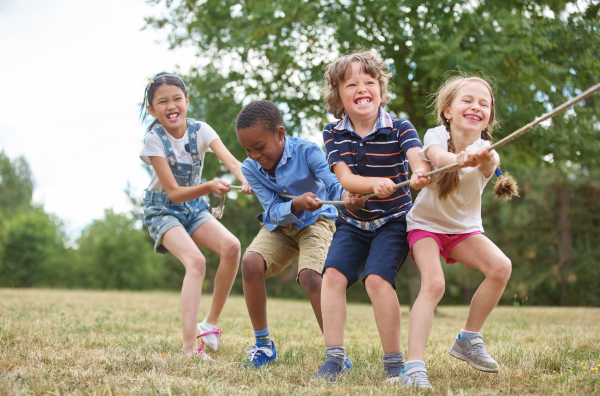
- Tug-of-War - a classic outdoor team game requiring a sturdy rope. Divide students into two equal teams and pull. Simple, competitive, and universally understood.
- Nature Scavenger Hunt - students race to find items on a list (specific leaf, round rock, something red)
- Obstacle Courses - set up stations using cones, ropes, and natural features to enhance teamwork and communication skills.
- Chuck the Chicken - one team throws a rubber chicken as far as possible while the other team huddles and counts rotations. Teams switch roles.
- Relay Races - classic format with creative twists (carry an egg on a spoon, hop on one foot)
- Capture the Flag - divide into two teams, hide flags, strategize retrieval
- Team Sports Variations - modified games where rules emphasize passing to every team member before scoring
- Group Jump Rope - long rope, whole group tries to jump together
Indoor Classroom Activities
These indoor team building activities work in tight spaces:
- Desk-Based Puzzles - logic puzzles solved in pairs at desks
- Silent Communication Games - draw a picture to communicate a word to your team
- Creative Writing Collaborations - round-robin story writing
- Paper Airplane Contest - teams design, build, and fly paper airplanes for distance
- Origami Challenge - follow instructions as a team to create a figure
- Card Tower Building - use playing cards to build the tallest tower
- Pictionary Relay - one student draws, team guesses, then the next person draws the next word
- 20 Questions - one team thinks of something, the other team asks yes/no questions
- Word Association Chain - say a word, next person says a related word; if the connection isn't clear, the group challenges
- Collaborative Canvas - each person adds to a shared drawing without talking
How to Choose the Right Team Building Activity
Choose Based on Available Time
Factor in setup and cleanup. A 15-minute activity that needs 10 minutes of prep is really a 25-minute commitment.
Choose Based on Group Size
For small groups of 3-5, use activities where every team member has a clear role. For larger classes, divide students into small teams of 4-6 and run parallel challenges. Activities like scavenger hunts scale well because you can adjust group size without changing the core activity.
Choose Based on Learning Objectives
Team-building activities encourage problem-solving and critical thinking when structured intentionally. Match the activity to your goal:
- Communication: Silent Line-Up, Telephone, Blind Minefield
- Trust: Falling Trees, Blind Minefield
- Problem solving: Escape Room, Marshmallow Tower, Bridge Building
- Leadership: Business Simulation, Project Management, Shark Tank Pitch
- Creativity: Fashion Design, Collaborative Canvas, Meme Contest
Reflecting on team-building activities enhances communication and teamwork skills. Always include a short debrief. Team-building activities develop communication skills among students, but only when students process what happened.
Choose Based on Student Needs
Consider your students' energy levels, social comfort, and emotional intelligence. A class with unresolved conflict might need low-stakes icebreakers before trust exercises. New classes at the start of the school year benefit from activities that foster collaboration without high pressure.
For students with accommodations, most activities on this list can be modified. The 2026 meta-analysis confirmed that group engagement interventions remain effective across grade levels, including settings with students with disabilities.
Which Activity Is Best for Your Situation?
Here's a quick decision guide:
- Need a quick energy boost? → Rock Paper Scissors Tournament or Freeze Dance
- Building a new classroom community? → Classroom Bingo or Two Truths and a Lie. Team building promotes social inclusion and fosters friendships from day one.
- Addressing conflict? → Conflict Resolution Scenarios or Would You Rather Debate
- Practicing communication? → Silent Line-Up or Blind Minefield
- Developing leadership? → Shark Tank Pitch or Project Management Simulation
- Integrating entrepreneurship? → Lemonade Stand Planning Challenge or Budget Challenge. These connect directly to experiential programs where students stand behind a real business.
- Running a growth mindset activity? → Innovation Challenge or Reverse Engineering
The best activity is the one that matches your students' needs right now - not the flashiest one on the list.
Building Life Skills Through Team Activities
Team building isn't a classroom filler. It's a delivery mechanism for essential skills students need beyond school.
Life skills education includes financial literacy and entrepreneurship for children. When students collaborate on a business simulation or plan a lemonade stand together, they're practicing budgeting, marketing, negotiation, and customer service - all within a team context. Experiential education programs support youth by teaching them business planning through hands-on collaboration.
At Lemonade Day, this is the core philosophy: children learn by doing. They set goals, build budgets, market their product, manage a team, and then spend, save, and share their profits. Every step requires teamwork, and every failure teaches resilience.
Research supports this approach. A 2026 study on equity-based SEL found that students in equity-based programs showed significantly higher awareness of social issues and identities while maintaining SEL gains equal to skills-based programs. When team building includes real-world relevance and identity-affirming practices, the benefits deepen.
The connection is clear: team building activities develop problem solving abilities, trust, communication, and leadership. These are the same skills that make young entrepreneurs successful and adults effective.
Final Thoughts
The activities in this guide range from 5-minute energizers to multi-session projects. Start with one. Run it this week. Watch what happens when students work toward a shared goal instead of competing individually.
Strong teamwork skills built in the classroom follow students into careers, businesses, and communities. Whether you use a simple hula hoop or a full escape room, what matters is that students practice working together - and reflect on what they learned.
If you're ready to take team building beyond the classroom, Lemonade Day gives students the chance to apply every skill on this list by planning and running a real business. It's free, it's experiential, and it works.
Frequently Asked Questions
How often should we do team building activities with students? Aim for at least one structured team activity per week. Research shows that interventions lasting more than two weeks produce stronger, more durable results. Consistency matters more than intensity.
What if some students resist participating in team activities? Start with low-risk activities like Two Truths and a Lie or Classroom Bingo. Give reluctant students observer roles first, then gradually increase involvement. Never force physical contact activities on students who aren't ready.
How do I modify activities for students with special needs? Most activities on this list adapt easily. For mobility limitations, choose seated activities like Collaborative Storytelling or Trivia. For sensory sensitivities, avoid loud or chaotic games. The 2026 meta-analysis confirmed that team interventions work effectively across ability levels when properly adapted.
Can team building activities be used for assessment purposes? Yes. Use observation rubrics to assess communication, collaboration, and problem solving during activities. Document leadership behaviors, conflict resolution, and contribution levels. These provide formative data on social-emotional growth.
What's the best way to debrief after team building activities? Ask three questions: "What worked well?" "What was hard?" and "What would you do differently?" Keep debriefs short (3-5 minutes) but consistent. Reflecting on activities enhances learning and helps students transfer skills to other contexts.
How do I handle conflicts that arise during team activities? Pause the activity if needed. Use the conflict as a teachable moment - ask students to identify the issue, propose solutions, and agree on next steps. This mirrors real-world conflict resolution and makes the activity more valuable, not less.
Are there team building activities that connect to academic subjects? Absolutely. Scavenger hunts can incorporate vocabulary or math problems. Escape rooms can use science concepts as puzzle clues. Business simulations teach math, writing, and economics simultaneously. The best team building exercises weave academics into collaboration naturally.

back to blog
Team building activities for students do more than fill time between lessons. They build the communication skills, collaboration habits, and problem-solving abilities that shape how young people interact with the world. Team building activities can range from icebreakers to complex challenges, and the right ones help students learn to express ideas clearly, build trust, and foster friendships that make classrooms feel like communities.
Engaging in team building fosters a sense of belonging in classrooms. Group activities combine cognitive and social learning experiences for youth education, which is why effective team-building activities foster trust and enhance communication skills simultaneously. Effective communication includes both verbal and non-verbal skills, and the best activities train both.
This guide covers 50+ team building activities organized by grade level, filtered by time, materials, and setting. Whether you teach kindergarten or coach high schoolers, you'll find activities matched to your situation.
How We Chose the Best Team Building Activities for Students
Not every activity labeled "team building" actually builds teams. Effective team-building activities adapt to different age groups and classroom dynamics. Here's how we evaluated each one:
- Age appropriateness: Activities match the cognitive and social capacity of the target grade level. What works for a second grader won't land with a high schooler.
- Ease of implementation: Minimal prep, quick setup, and clear instructions. Teachers don't have 30 minutes to arrange an activity. Team-building exercises generally require minimal materials and encourage creativity.
- Learning objectives alignment: Each activity targets specific skills - leadership, trust, decision-making, creative thinking, or communication.
- Inclusivity and accessibility: Activities work for diverse learners, including students with disabilities. A 2026 meta-analysis of 50 behavioral intervention studies across K-12 settings found large effect sizes for improving group engagement (SMD = 2.28 for single-case designs, g = 1.69 for group designs), and these effects held regardless of disability inclusion.
- Safety: Physical and psychological safety considerations for every activity, including emotional debriefs where needed.
- Proven effectiveness: We prioritized activities backed by educator feedback, published research, and observable classroom outcomes.
Elementary School Team Building Activities (Grades K-5)
Elementary students need activities with simple instructions, short time frames, and plenty of movement. A systematic review of 56 primary school studies found that activity-based learning was the most common and effective approach for building social awareness and relationship skills in this age group. Building activities enhance problem-solving skills through hands-on experience, even for the youngest learners.
Featured Elementary Activities
1. Human Knot - The human knot requires 5 to 10 students to stand in a circle, grab hands with two different people across from them, and untangle themselves without letting go. Non-verbal communication is improved through games like The Human Knot. This awesome team building game builds patience and spatial reasoning.
- Best for: Grades 2-5
- Time: 10-15 minutes
- Strengths: Zero materials, high energy, teaches cooperation
- Limitations: Can be frustrating for younger students; requires physical comfort with peers
2. Marshmallow Tower Challenge - Give teams 20 spaghetti sticks, tape, and one marshmallow, and challenge them to build the tallest freestanding tower that holds the marshmallow on top. The Marshmallow Tower Challenge fosters teamwork and creative problem-solving as students figure out what actually stands up.
- Best for: Grades 3-5
- Time: 15-20 minutes
- Strengths: Develops engineering thinking, requires real collaboration
- Limitations: Needs materials (spaghetti, tape, marshmallows)
3. Birthday Lineup (Silent Line-Up) - Birthday lineup helps students find their place by birthdays - without talking. Silent Line-Up encourages nonverbal communication among students. Students stand in a line and use only gestures and hand signals to arrange themselves in calendar order.
- Best for: Grades K-5
- Time: 5-10 minutes
- Strengths: No materials, builds non-verbal communication, inclusive
4. Storytime Chain - Students add four words to a growing story, one at a time, building a collective narrative. Storytime enhances verbal communication as each student must listen and build on what came before.
- Best for: Grades K-4
- Time: 10 minutes
5. Compliment Chain - Students sit in a circle. The first person gives a genuine compliment to the next student, who passes one along to the next person. This builds social skills for kids and classroom warmth.
- Best for: Grades K-3
- Time: 5-10 minutes
6. Hula Hoop Pass - Students stand in a circle holding hands, with a hula hoop resting on one student's arm. The hoop must travel around the entire circle without anyone letting go - students thread it over their bodies using only movement and coordination with their neighbors.
- Best for: Grades K-5
- Time: 10 minutes
- Strengths: Physical, fun, requires whole class participation
7. Puzzle Piece Connections - Divide students into small groups. Give each group a puzzle, but mix a few pieces from other groups' puzzles in. Students work together and then negotiate with other teams to complete their puzzles.
- Best for: Grades 2-5
- Time: 15 minutes
8. Two Truths and a Lie - Two Truths and a Lie is an icebreaker that helps students practice speaking and attentive listening. One student shares three statements - two true, one false - and other students guess the lie. It's a fun way to build listening skills and learn about classmates.
- Best for: Grades 2-5
- Time: 10-15 minutes
9. Classroom Bingo - Bingo can include characteristics like "I have a sister," "I speak two languages," or "I like pizza." Students walk around the room finding classmates who match each square. This is a great community building activity for elementary students.
- Best for: Grades 1-5
- Time: 10-15 minutes
10. Building a Classroom Mascot - Building a classroom mascot fosters collaboration and creativity among students. Divide students into small teams and give each team craft sticks, paper, markers, and tape. Each team designs a mascot, then the whole class votes or combines ideas into one. This is a fun activity that can kick off the school year.
- Best for: Grades K-4
- Time: 20-30 minutes
11. The Great Chain Race - The Great Chain Race requires students to use creative thinking for teamwork. Give teams paper strips, tape, and scissors. Students race to build the longest paper chain within a time limit. All the teams compare their chains at the end.
- Best for: Grades 1-5
- Time: 10 minutes
12. Cooperative Musical Chairs - Instead of eliminating players, remove chairs and require students to share remaining seats. The whole class must fit on fewer and fewer chairs without anyone touching the ground.
- Best for: Grades K-3
- Time: 10 minutes
13. Pass the Drawing - One student draws for 30 seconds, then passes the paper to the next student. After everyone adds to it, the group guesses what the original drawing was supposed to be. Teaches students that collaboration means building on each other's work.
- Best for: Grades K-5
- Time: 10 minutes
14. Group Freeze Dance - Students dance when music plays, freeze when it stops. Add a team twist: when the music stops, students must freeze in a group pose (e.g., "make a bridge with your group"). Students learn to coordinate quickly.
- Best for: Grades K-2
- Time: 10 minutes
15. Tower of Cups - Give small teams 20 plastic cups and a rubber band with four strings tied to it. Students must work together to stack the cups into a pyramid without touching cups with their hands - only using the rubber band tool. This activity develops confidence building through shared success.
- Best for: Grades 2-5
- Time: 15 minutes
Middle School Team Building Activities (Grades 6-8)
Middle school is where peer relationships get complicated. Team building activities for middle school students need to balance fun with genuine skill development. A study on team-building physical education programs for middle school found measurable improvements in sociability, fair play, social responsibility, and positive interpersonal relations.
Team-building activities help students develop problem-solving abilities and trust - both essential at an age when social dynamics shift daily.
Featured Middle School Activities
16. Escape Room Challenges - Escape room games require students to solve puzzles collaboratively under a time limit, encouraging critical thinking and teamwork. Create a DIY escape room with locks, coded messages, and clues hidden around the classroom.
- Best for: Grades 6-8
- Time: 30-45 minutes
- Strengths: High engagement, develops problem solving skills
- Limitations: Requires significant prep time
17. Blind Minefield - Blind Minefield involves one blindfolded student guided by a partner through an obstacle course made of classroom objects. The blindfolded student relies entirely on verbal cues from their team members. Obstacle run uses classroom furniture to create a maze for blindfolded students.
- Best for: Grades 6-8
- Time: 15 minutes
- Strengths: Builds trust, sharpens communication
18. Cup Stacking Challenge - Cup stacking involves teams of four to eight students. Cup stacking uses rubber bands and strings to build a pyramid - students pull the strings to stretch the rubber band, lift cups, and place them without direct hand contact. It's one of those favorite team building activities that never gets old.
- Best for: Grades 5-8
- Time: 15 minutes
19. Group Story Building - Like Storytime but more complex: give each small group a scenario and have them write a collaborative short story with a beginning, middle, and end. Each team member must contribute at least one plot point.
- Best for: Grades 6-8
- Time: 20 minutes
20. Falling Trees Trust Exercise - Falling Trees involves students catching a stiff "tree" in a circle. One student stands rigid in the center while the rest of the group gently catches and passes them around the circle. This builds physical trust and group accountability.
- Best for: Grades 6-8
- Time: 15 minutes
- Limitations: Requires psychological safety and physical comfort
21. Look Into My Eyes - Look into my eyes requires students to maintain eye contact for 60 seconds with a partner without laughing or looking away. Sounds simple, but it's surprisingly challenging and teaches focused attention.
- Best for: Grades 6-8
- Time: 5 minutes
22. Fashion Design Challenge - Give teams limited materials (newspaper, tape, scissors) and a time limit. Each team designs and "models" an outfit. Judges award points for creativity, teamwork, and presentation. Students work together under pressure while practicing public speaking for kids.
- Best for: Grades 6-8
- Time: 25 minutes
23. Bridge Building Challenge - Teams use craft sticks, tape, and string to build a bridge that can hold a textbook. Students race to finish first, but the winning team is the one whose bridge holds the most weight.
- Best for: Grades 6-8
- Time: 20-30 minutes
24. STEM Tower Race - Based on a 2026 STEM action research study that found significant gains in cooperation and communication when Grade 5 students completed structured team engineering tasks: give teams index cards, tape, and a ruler. The goal is the tallest freestanding tower. Measure and discuss what worked.
- Best for: Grades 5-8
- Time: 20 minutes
25. Minefield Navigation - Set up an obstacle course in the gym or classroom. Divide students into two teams. One team member is blindfolded while another gives directions. The other team tries to (safely) distract. This teaches students to focus and communicate under pressure.
- Best for: Grades 6-8
- Time: 15 minutes
26. Would You Rather Debate - Pose "Would You Rather" scenarios related to school, ethics, or hypothetical situations. Students take sides and must argue their position. Develops critical thinking and persuasion.
- Best for: Grades 6-8
- Time: 10-15 minutes
27. Team Trivia Tournament - Divide students into equal teams. Ask trivia questions across subjects. Teams discuss answers before submitting. This is a classic game format that promotes collaboration and friendly competition.
- Best for: Grades 5-8
- Time: 20 minutes
28. Human Conveyor Belt - Students lie side by side on the floor. One student "rolls" across the top, supported by their classmates' arms. Then they join the line, and the next person goes. Builds trust and group coordination.
- Best for: Grades 6-8
- Time: 15 minutes
29. Collaborative Playlist - Each team member suggests one song that represents them. The group creates a team playlist with a theme. Students present their playlist and explain their choices. Fosters connection and respect for differences.
- Best for: Grades 7-8
- Time: 15 minutes
30. Classroom Create: Mural Project - Give each team a section of butcher paper. They must design their section to connect visually with adjacent teams' sections. The finished product is a classroom created mural that hangs all year.
- Best for: Grades 5-8
- Time: 30 minutes
High School Team Building Activities (Grades 9-12)
High school students need team building activities that respect their maturity while developing leadership skills and real-world collaboration. Research on sports team cohesion shows that interventions lasting more than two weeks produce significantly stronger task cohesion - the ability to work effectively toward shared objectives.
Students develop leadership skills through team building exercises at this level. Activities should connect to future career skills and essential skills for adulthood.
Featured High School Activities
31. Business Simulation Games - Teams receive a budget, a product idea, and a market scenario. They must plan pricing, marketing, and sales strategy, then "pitch" to a panel. This is where team building skills meet entrepreneurship. Activities like these connect directly to programs like Lemonade Day, where students plan and run real businesses.
- Best for: Grades 9-12
- Time: 45-60 minutes
32. Debate Circles - Debate Circles foster verbal skills and empathy through group discussions. Assign teams a topic, give them 10 minutes to prepare, and run a structured debate. The twist: halfway through, teams switch sides and argue the opposite position.
- Best for: Grades 9-12
- Time: 30 minutes
- Strengths: Builds empathy, critical thinking, and articulation
33. Community Service Projects - Teams identify a local need, plan a service project, execute it, and present results. This builds project management skills, accountability, and civic responsibility.
- Best for: Grades 9-12
- Time: Multi-session
34. Innovation Challenge - Present a real-world problem (food waste, water conservation, school attendance). Teams brainstorm, prototype, and pitch solutions. Judges evaluate creativity, feasibility, and teamwork.
- Best for: Grades 10-12
- Time: 45-60 minutes
35. Conflict Resolution Scenarios - Give teams a realistic conflict scenario (workplace disagreement, group project dispute). They role-play resolution strategies and debrief. This connects to conflict resolution skills that serve students throughout life.
- Best for: Grades 9-12
- Time: 20-30 minutes
36. Shark Tank Pitch - Teams develop a product concept, create a basic business plan, and pitch to "investors." This fun team building activity teaches collaboration, persuasion, and financial literacy. About a quarter of team time should go to rehearsing the pitch.
- Best for: Grades 9-12
- Time: 45-60 minutes
37. Survival Scenario - Teams are "stranded" with a list of 15 items. They must rank items by importance for survival, first individually, then as a group. Compare group decisions to expert rankings. Demonstrates that teams solve problems better than individuals.
- Best for: Grades 9-12
- Time: 20-30 minutes
38. Lemonade Stand Planning Challenge - Teams plan a complete lemonade stand business: budget, marketing, pricing, location, and supply chain. They present plans and the class votes on the most viable business. This directly mirrors the entrepreneurial mindset development that real Lemonade Day participants experience.
- Best for: Grades 6-12
- Time: 30-45 minutes
39. Creative Collaboration: Meme Contest - Creative collaboration activities, like creating memes, promote teamwork and creativity. Teams create memes related to a class topic or school experience. The class votes on the best ones. Surprisingly effective at building rapport.
- Best for: Grades 9-12
- Time: 15-20 minutes
40. Project Management Simulation - Give teams a complex task with dependencies, deadlines, and limited resources. They must assign roles (project manager, researcher, presenter), manage their timeline, and deliver. Students take ownership of real responsibilities.
- Best for: Grades 10-12
- Time: Multi-session
41. Reverse Engineering Challenge - Give teams a finished product (a simple machine, a recipe result, a coded message). They must figure out how it was made, then replicate it. Develops analytical thinking and team coordination.
- Best for: Grades 9-12
- Time: 25-30 minutes
42. Speed Networking - Modeled after speed dating, students rotate through 2-minute conversations with classmates, answering prompts like "What's a skill you're proud of?" and "What's a problem worth solving?" Builds connection and leadership for kids by practicing professional communication.
- Best for: Grades 9-12
- Time: 15-20 minutes
43. Documentary Planning - Teams plan a 3-minute documentary on a school or community topic. They outline scenes, assign roles (director, interviewer, editor), and create a storyboard. Even without filming, the planning process teaches students how to work effectively as a production team.
- Best for: Grades 9-12
- Time: 30 minutes
44. Budget Challenge - Give each team a fictional budget and a set of expenses. They must make spending decisions as a group, balancing wants vs. needs. Connects to financial literacy games and real-world money management.
- Best for: Grades 9-12
- Time: 20 minutes
45. Legacy Letter - Teams write a letter to next year's class, sharing advice, memories, and lessons learned. Each team member contributes a section. This reflective exercise builds emotional intelligence and collective identity.
- Best for: Grades 11-12
- Time: 20-25 minutes
K-12 Classroom Activities (All Ages)
These classroom team building activities work across every grade level with simple modifications. They're versatile, require minimal setup, and promote collaboration regardless of age.
46. Scavenger Hunt - Scavenger hunts work in pairs, small groups, or larger teams - students learn to strategize and divide tasks under pressure. For elementary students, use picture clues; for high school students, add riddles or academic content.
- Time: 15-30 minutes
47. Collaborative Canvas - Collaborative Canvas involves students creating a joint artwork together. Give each student one section of a large canvas or paper. They create their piece independently, then assemble the finished artwork. Works for any grade level.
- Time: 20-30 minutes
48. Collaborative Storytelling - Like Storytime for older students: each group member adds a sentence or paragraph. Vary complexity by grade level. Teaches students that every voice matters.
- Time: 10-15 minutes
49. Group Art Projects - Assign a theme (seasons, community, dreams) and have small teams create a poster, sculpture, or collage. The whole class displays results. This is a classroom team building activity that doubles as decoration.
- Time: 20-30 minutes
50. Hula Hoop Challenge (Advanced) - Stand the whole class in a circle. Place a hula hoop on one person's arm. Everyone joins hands. The hula hoop must travel around the entire circle without anyone releasing hands. For younger students, use a bigger hoop. When fingers slip, the group resets and tries again.
- Time: 10-15 minutes
51. Telephone (Classic) - This classic game never fails. One student whispers a message to the next person, who whispers to the next student, and so on. Compare the original message to the final version. Teaches how communication breaks down - and why clarity matters.
- Time: 5-10 minutes
52. Group Juggle - Stand in a circle. Toss one ball in a pattern (each person throws to the same person each time). Once the pattern is established, add more balls. Students must communicate, focus, and adapt - all while having fun.
- Time: 10 minutes
Quick-Filter Activity Categories
5-Minute Team Building Activities
When you have five minutes between lessons, these team activities keep students entertained and connected:
- Rock Paper Scissors Tournament - students pair up; winners face winners until one student stands as champion
- Would You Rather - pose two options, students move to different sides of the room
- Quick Trivia - one question, teams huddle for 30 seconds, first correct answer wins
- Thumb Ball - write prompts on a ball; wherever your thumb lands, answer the question
- Stand Up, Sit Down - read statements ("stand up if you have a pet"); builds community fast
- High-Five Chain - students high-five as many classmates as possible in 60 seconds
- Categories - name a category (fruits, countries); students take turns naming items until someone repeats or blanks
- Silent Lineup by Height - students arrange themselves by height without talking
No Supplies Needed Activities
These building activities for students require zero materials:
- Human Alphabet - small teams form letters with their bodies
- Telephone - the classic whisper chain
- Categories - verbal elimination game
- Silent Line-Up by Birthday - nonverbal ordering challenge
- Mirror, Mirror - partners mirror each other's movements
- Group Counting - the whole class tries to count to 20, one person at a time, no order; if two people speak simultaneously, restart
- Freeze Dance - music and movement, no equipment needed
- Two Truths and a Lie - speaking and listening practice
- Would You Rather Debate - verbal reasoning, no prep
- Compliment Circle - pass genuine compliments around a circle
Outdoor Team Building Activities
These outdoor team building activities take advantage of space and fresh air:
- Tug-of-War - a classic outdoor team game requiring a sturdy rope. Divide students into two equal teams and pull. Simple, competitive, and universally understood.
- Nature Scavenger Hunt - students race to find items on a list (specific leaf, round rock, something red)
- Obstacle Courses - set up stations using cones, ropes, and natural features to enhance teamwork and communication skills.
- Chuck the Chicken - one team throws a rubber chicken as far as possible while the other team huddles and counts rotations. Teams switch roles.
- Relay Races - classic format with creative twists (carry an egg on a spoon, hop on one foot)
- Capture the Flag - divide into two teams, hide flags, strategize retrieval
- Team Sports Variations - modified games where rules emphasize passing to every team member before scoring
- Group Jump Rope - long rope, whole group tries to jump together
Indoor Classroom Activities
These indoor team building activities work in tight spaces:
- Desk-Based Puzzles - logic puzzles solved in pairs at desks
- Silent Communication Games - draw a picture to communicate a word to your team
- Creative Writing Collaborations - round-robin story writing
- Paper Airplane Contest - teams design, build, and fly paper airplanes for distance
- Origami Challenge - follow instructions as a team to create a figure
- Card Tower Building - use playing cards to build the tallest tower
- Pictionary Relay - one student draws, team guesses, then the next person draws the next word
- 20 Questions - one team thinks of something, the other team asks yes/no questions
- Word Association Chain - say a word, next person says a related word; if the connection isn't clear, the group challenges
- Collaborative Canvas - each person adds to a shared drawing without talking
How to Choose the Right Team Building Activity
Choose Based on Available Time
Factor in setup and cleanup. A 15-minute activity that needs 10 minutes of prep is really a 25-minute commitment.
Choose Based on Group Size
For small groups of 3-5, use activities where every team member has a clear role. For larger classes, divide students into small teams of 4-6 and run parallel challenges. Activities like scavenger hunts scale well because you can adjust group size without changing the core activity.
Choose Based on Learning Objectives
Team-building activities encourage problem-solving and critical thinking when structured intentionally. Match the activity to your goal:
- Communication: Silent Line-Up, Telephone, Blind Minefield
- Trust: Falling Trees, Blind Minefield
- Problem solving: Escape Room, Marshmallow Tower, Bridge Building
- Leadership: Business Simulation, Project Management, Shark Tank Pitch
- Creativity: Fashion Design, Collaborative Canvas, Meme Contest
Reflecting on team-building activities enhances communication and teamwork skills. Always include a short debrief. Team-building activities develop communication skills among students, but only when students process what happened.
Choose Based on Student Needs
Consider your students' energy levels, social comfort, and emotional intelligence. A class with unresolved conflict might need low-stakes icebreakers before trust exercises. New classes at the start of the school year benefit from activities that foster collaboration without high pressure.
For students with accommodations, most activities on this list can be modified. The 2026 meta-analysis confirmed that group engagement interventions remain effective across grade levels, including settings with students with disabilities.
Which Activity Is Best for Your Situation?
Here's a quick decision guide:
- Need a quick energy boost? → Rock Paper Scissors Tournament or Freeze Dance
- Building a new classroom community? → Classroom Bingo or Two Truths and a Lie. Team building promotes social inclusion and fosters friendships from day one.
- Addressing conflict? → Conflict Resolution Scenarios or Would You Rather Debate
- Practicing communication? → Silent Line-Up or Blind Minefield
- Developing leadership? → Shark Tank Pitch or Project Management Simulation
- Integrating entrepreneurship? → Lemonade Stand Planning Challenge or Budget Challenge. These connect directly to experiential programs where students stand behind a real business.
- Running a growth mindset activity? → Innovation Challenge or Reverse Engineering
The best activity is the one that matches your students' needs right now - not the flashiest one on the list.
Building Life Skills Through Team Activities
Team building isn't a classroom filler. It's a delivery mechanism for essential skills students need beyond school.
Life skills education includes financial literacy and entrepreneurship for children. When students collaborate on a business simulation or plan a lemonade stand together, they're practicing budgeting, marketing, negotiation, and customer service - all within a team context. Experiential education programs support youth by teaching them business planning through hands-on collaboration.
At Lemonade Day, this is the core philosophy: children learn by doing. They set goals, build budgets, market their product, manage a team, and then spend, save, and share their profits. Every step requires teamwork, and every failure teaches resilience.
Research supports this approach. A 2026 study on equity-based SEL found that students in equity-based programs showed significantly higher awareness of social issues and identities while maintaining SEL gains equal to skills-based programs. When team building includes real-world relevance and identity-affirming practices, the benefits deepen.
The connection is clear: team building activities develop problem solving abilities, trust, communication, and leadership. These are the same skills that make young entrepreneurs successful and adults effective.
Final Thoughts
The activities in this guide range from 5-minute energizers to multi-session projects. Start with one. Run it this week. Watch what happens when students work toward a shared goal instead of competing individually.
Strong teamwork skills built in the classroom follow students into careers, businesses, and communities. Whether you use a simple hula hoop or a full escape room, what matters is that students practice working together - and reflect on what they learned.
If you're ready to take team building beyond the classroom, Lemonade Day gives students the chance to apply every skill on this list by planning and running a real business. It's free, it's experiential, and it works.
Frequently Asked Questions
How often should we do team building activities with students? Aim for at least one structured team activity per week. Research shows that interventions lasting more than two weeks produce stronger, more durable results. Consistency matters more than intensity.
What if some students resist participating in team activities? Start with low-risk activities like Two Truths and a Lie or Classroom Bingo. Give reluctant students observer roles first, then gradually increase involvement. Never force physical contact activities on students who aren't ready.
How do I modify activities for students with special needs? Most activities on this list adapt easily. For mobility limitations, choose seated activities like Collaborative Storytelling or Trivia. For sensory sensitivities, avoid loud or chaotic games. The 2026 meta-analysis confirmed that team interventions work effectively across ability levels when properly adapted.
Can team building activities be used for assessment purposes? Yes. Use observation rubrics to assess communication, collaboration, and problem solving during activities. Document leadership behaviors, conflict resolution, and contribution levels. These provide formative data on social-emotional growth.
What's the best way to debrief after team building activities? Ask three questions: "What worked well?" "What was hard?" and "What would you do differently?" Keep debriefs short (3-5 minutes) but consistent. Reflecting on activities enhances learning and helps students transfer skills to other contexts.
How do I handle conflicts that arise during team activities? Pause the activity if needed. Use the conflict as a teachable moment - ask students to identify the issue, propose solutions, and agree on next steps. This mirrors real-world conflict resolution and makes the activity more valuable, not less.
Are there team building activities that connect to academic subjects? Absolutely. Scavenger hunts can incorporate vocabulary or math problems. Escape rooms can use science concepts as puzzle clues. Business simulations teach math, writing, and economics simultaneously. The best team building exercises weave academics into collaboration naturally.

STAY CONNECTED TO LEMONADE DAY NATIONAL


@LemonadeDayNational